Spec Work · 2026

Crocs — Brief to Campaign

Two complete :15 spec campaigns — fourteen final frames and two finished films — produced solo through an AI-assisted production pipeline under human art direction. Stills and motion generated via API, beat-cut in code with Remotion.

Spec work — not commissioned by or affiliated with Crocs, Inc.
2 :15 Campaign Films
14 Final Frames
6 Stage Pipeline

Could one person take a brand brief to finished campaigns?

The test: take a real brand — tone, product line, visual language studied from the live platform — and deliver two distinct, finished social campaigns using current-generation image and video models, with every creative decision made by a human art director and every frame measured against a single bar: it has to pass as real, or it doesn’t ship.

The hard part of AI production isn't generating images. It's consistency — the same camera, the same product colorways, the same character, frame after frame, until nine separate generations read as one campaign. That's a discipline problem, not a prompting problem, and it's what this project was built to prove.

Nano Banana Pro Seedance 2.0 fal.ai Remotion

“Every you. Every day.”

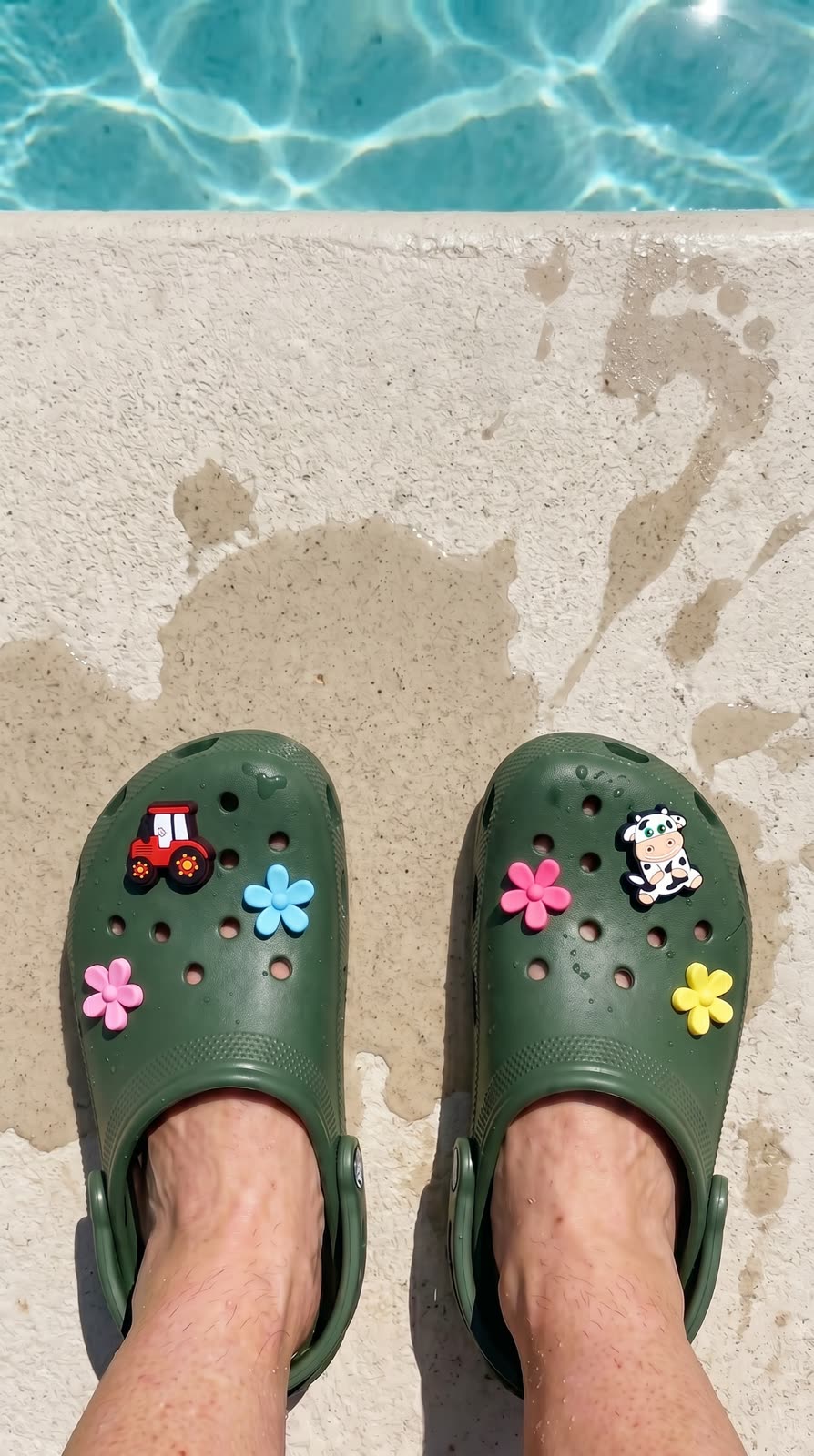
One fixed top-down camera. Feet in Crocs, dead center, every frame — everything else changes. Nine ordinary moments from one life, beat-cut at 124 BPM into a :15 loop. The discipline of the locked composition is what makes nine generations read as one campaign.
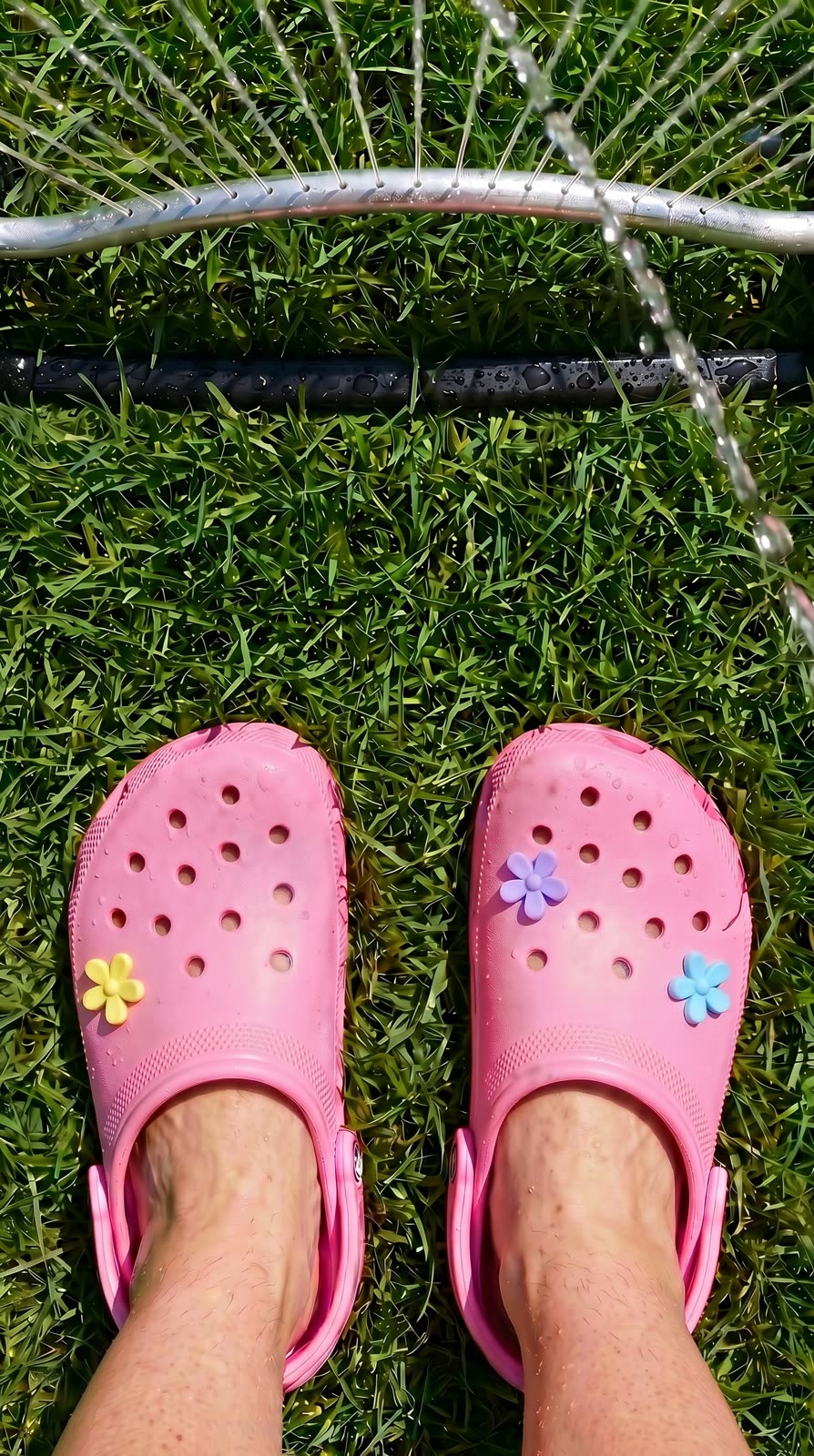
Frame 1 — sprinkler
The composition lock — every other frame anchors to this camera, scale, and stance.
Frame 2 — poolside
Colorway + charm fidelity held against product refs; loaded charms QA’d at zoom.
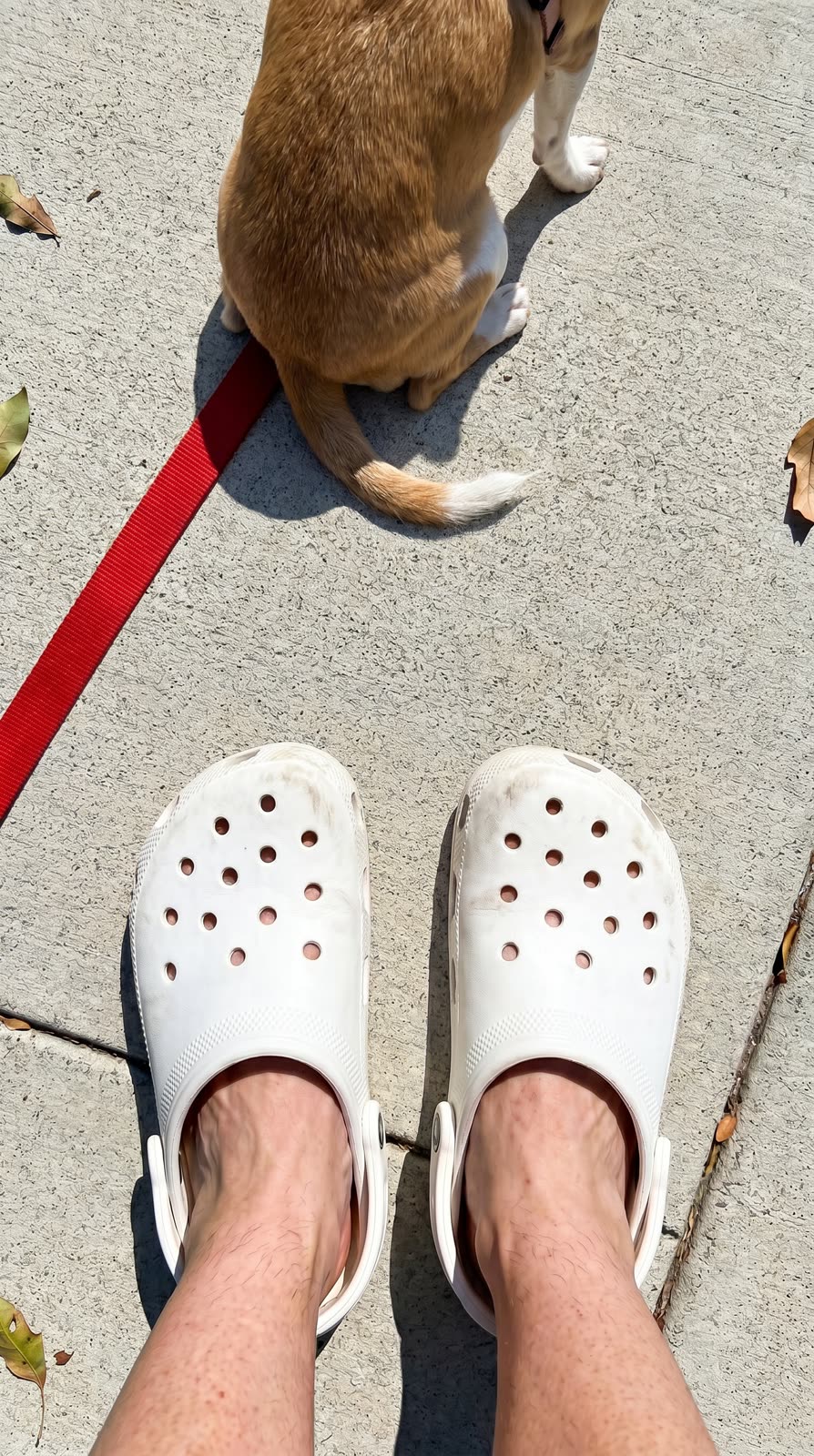
Frame 3 — dog walk
Scene story art-directed in iteration — the dog cropped to a tail at frame edge.
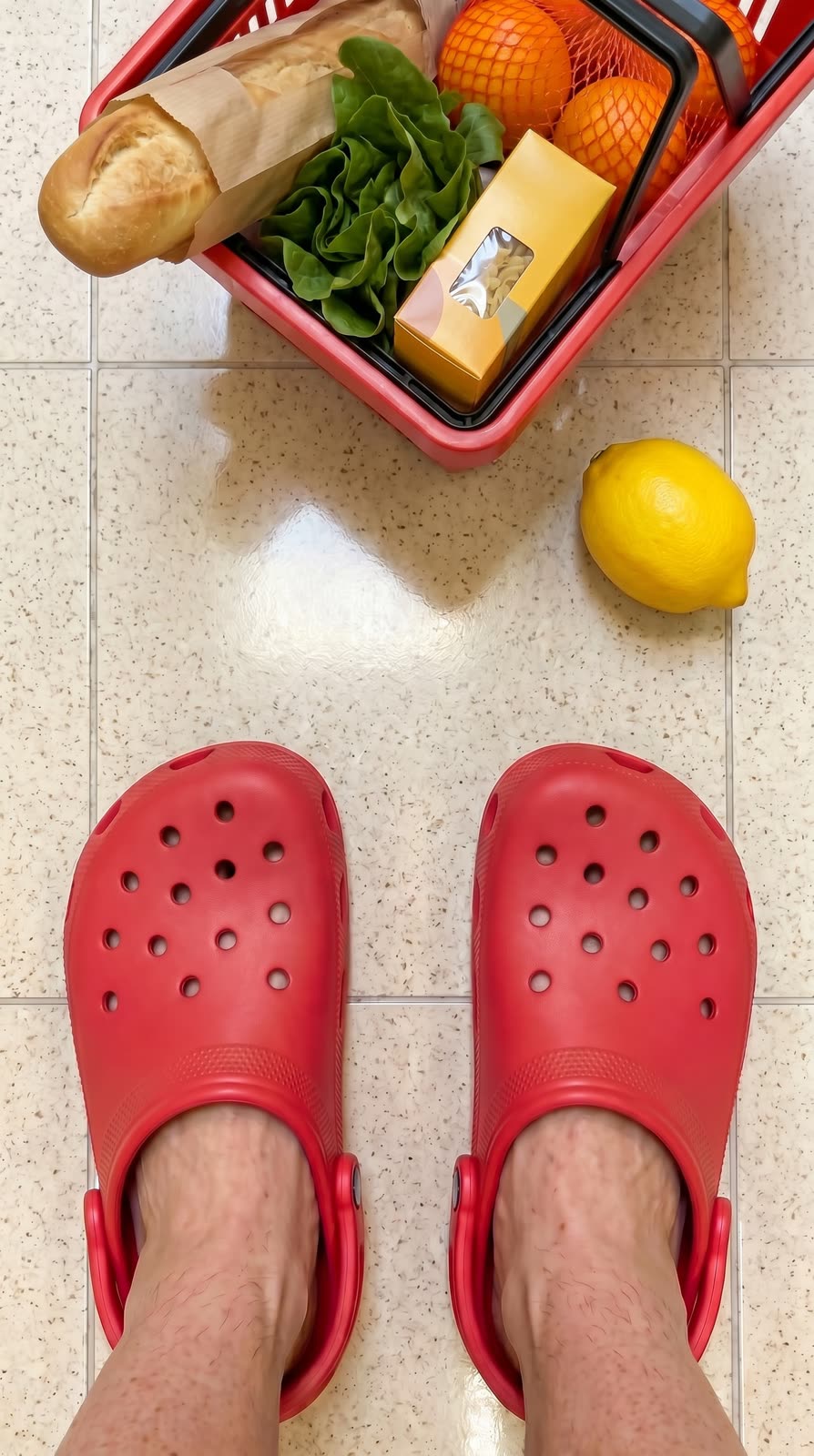
Frame 4 — grocery aisle
Set dressing kept brand-safe — packaging de-branded in a surgical edit pass.
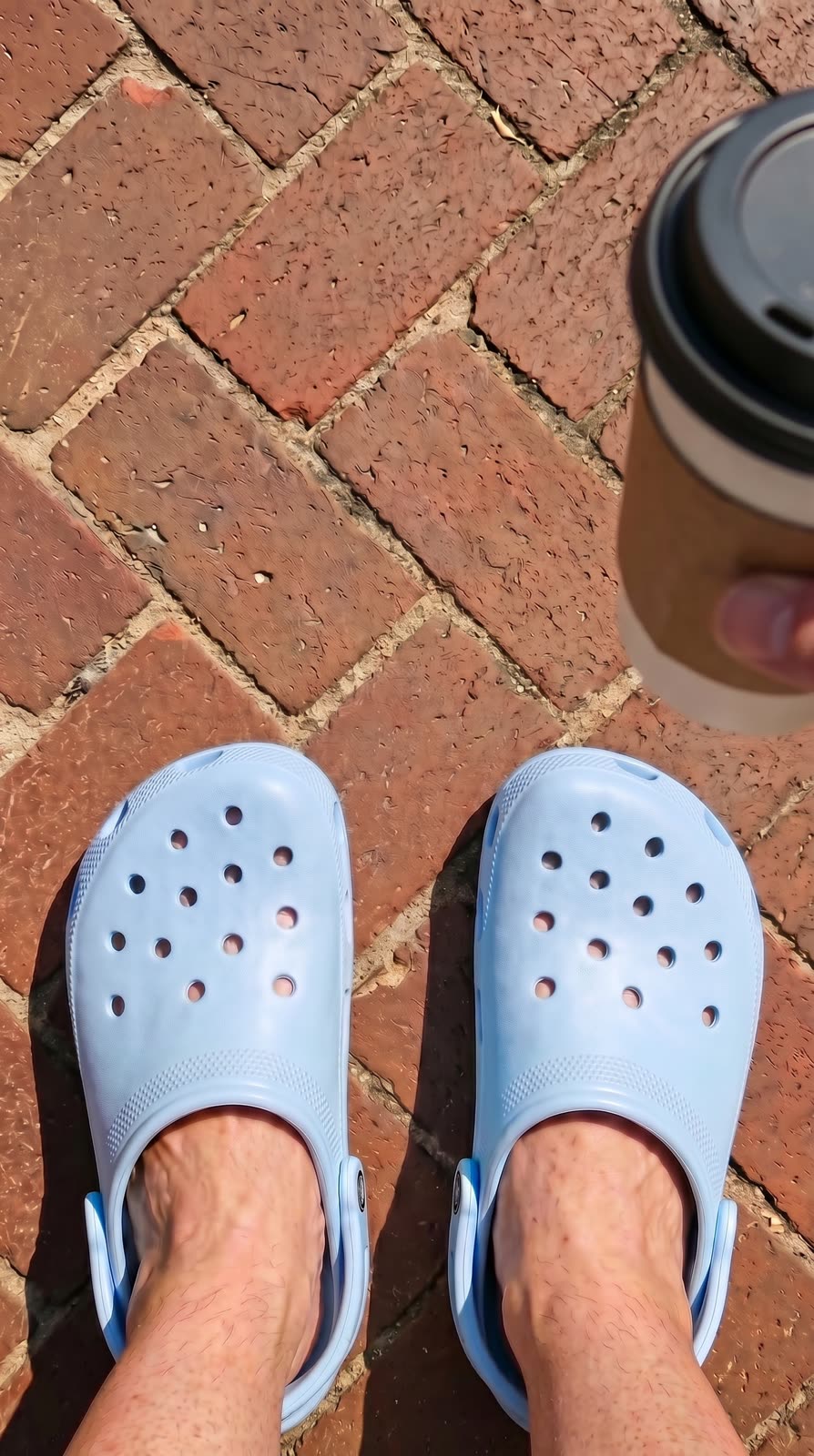
Frame 5 — coffee shop
Foreground cup re-staged for physical logic; focus held on product.
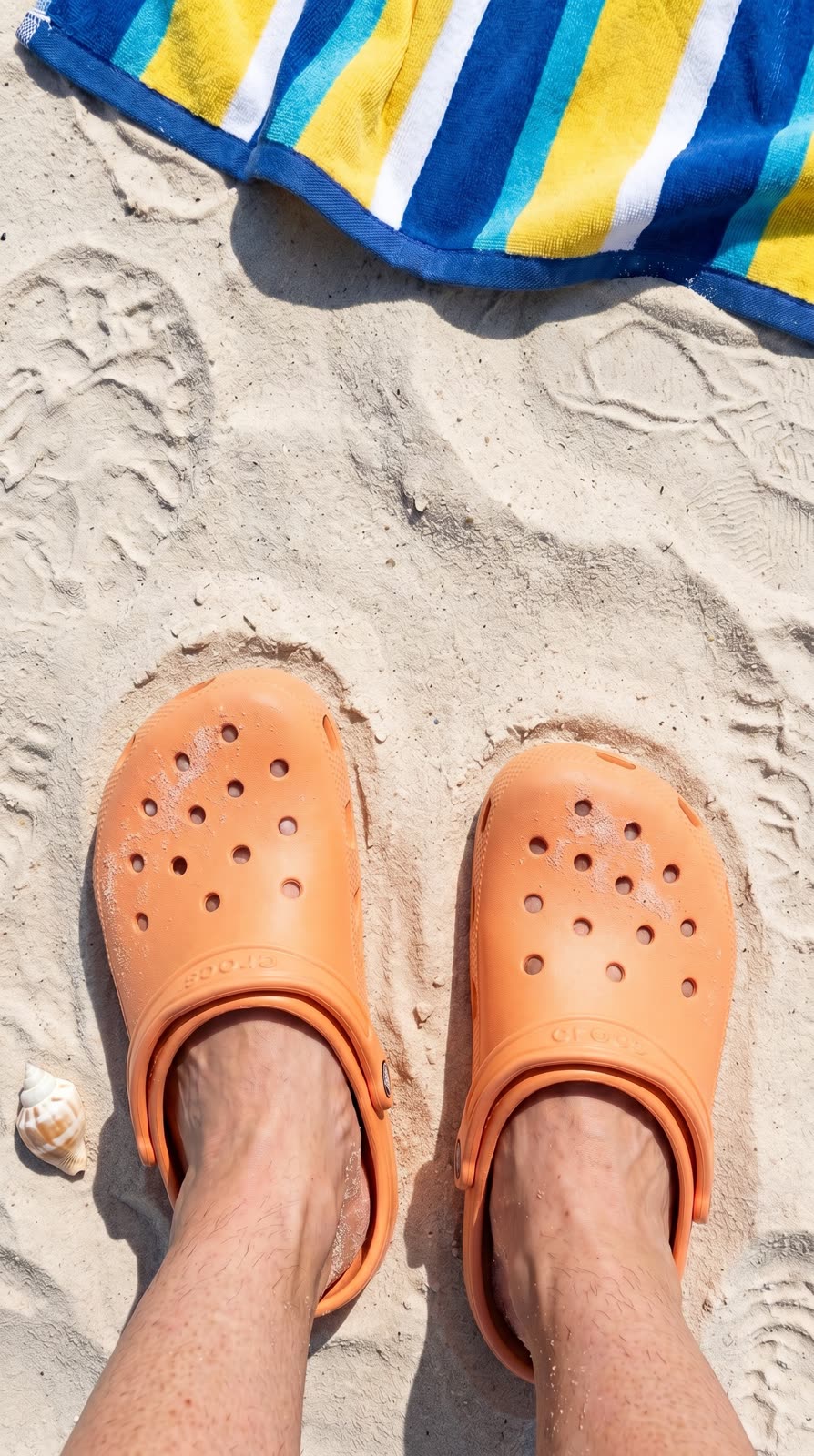
Frame 6 — beach
Texture retention — sand grain, dusted clogs, no render smoothing.
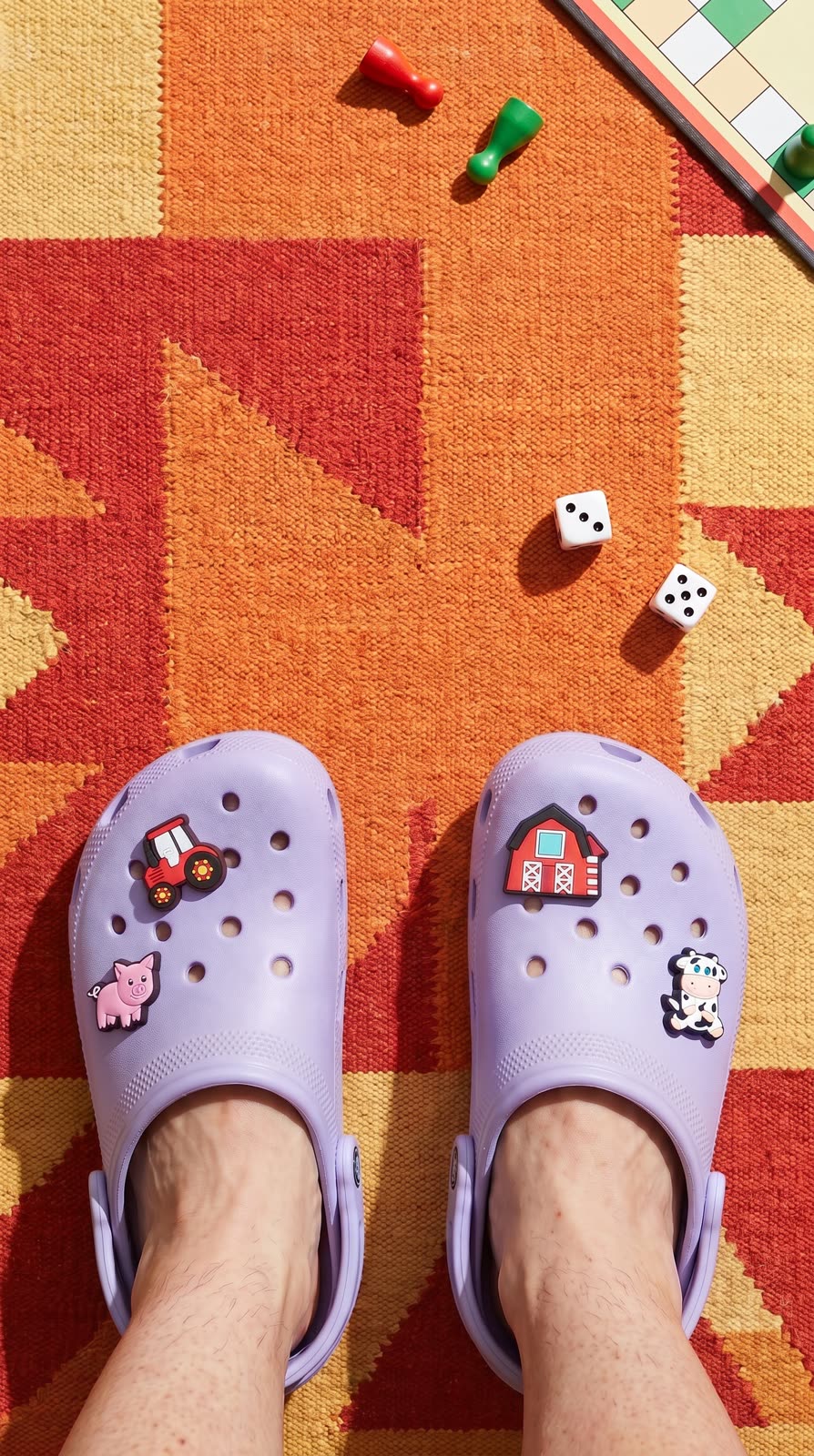
Frame 7 — game night
Character-style charms kept generic; seating verified per hole.
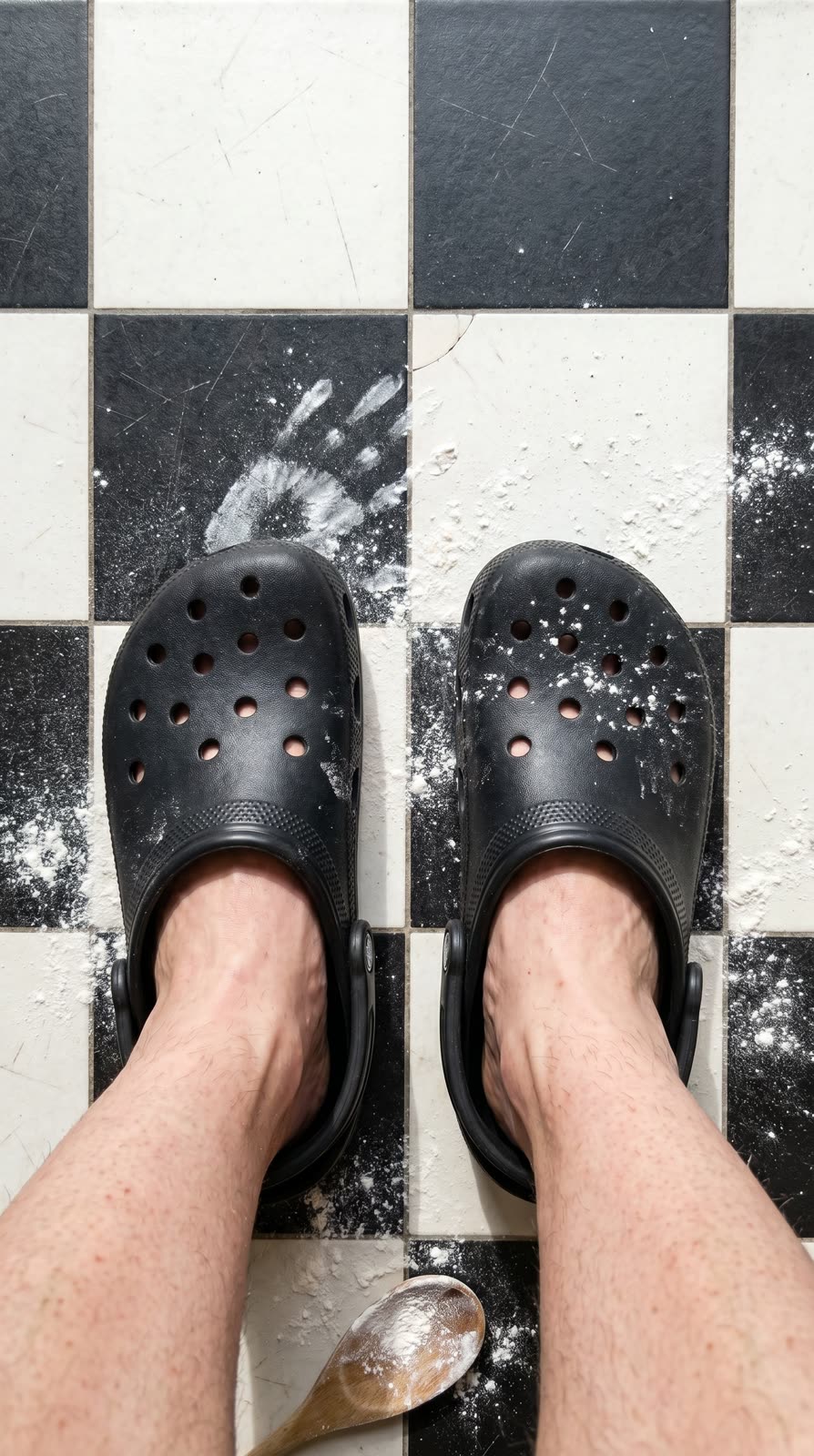
Frame 8 — kitchen
Stance lock defended against a graphic ground that kept pulling the pose.
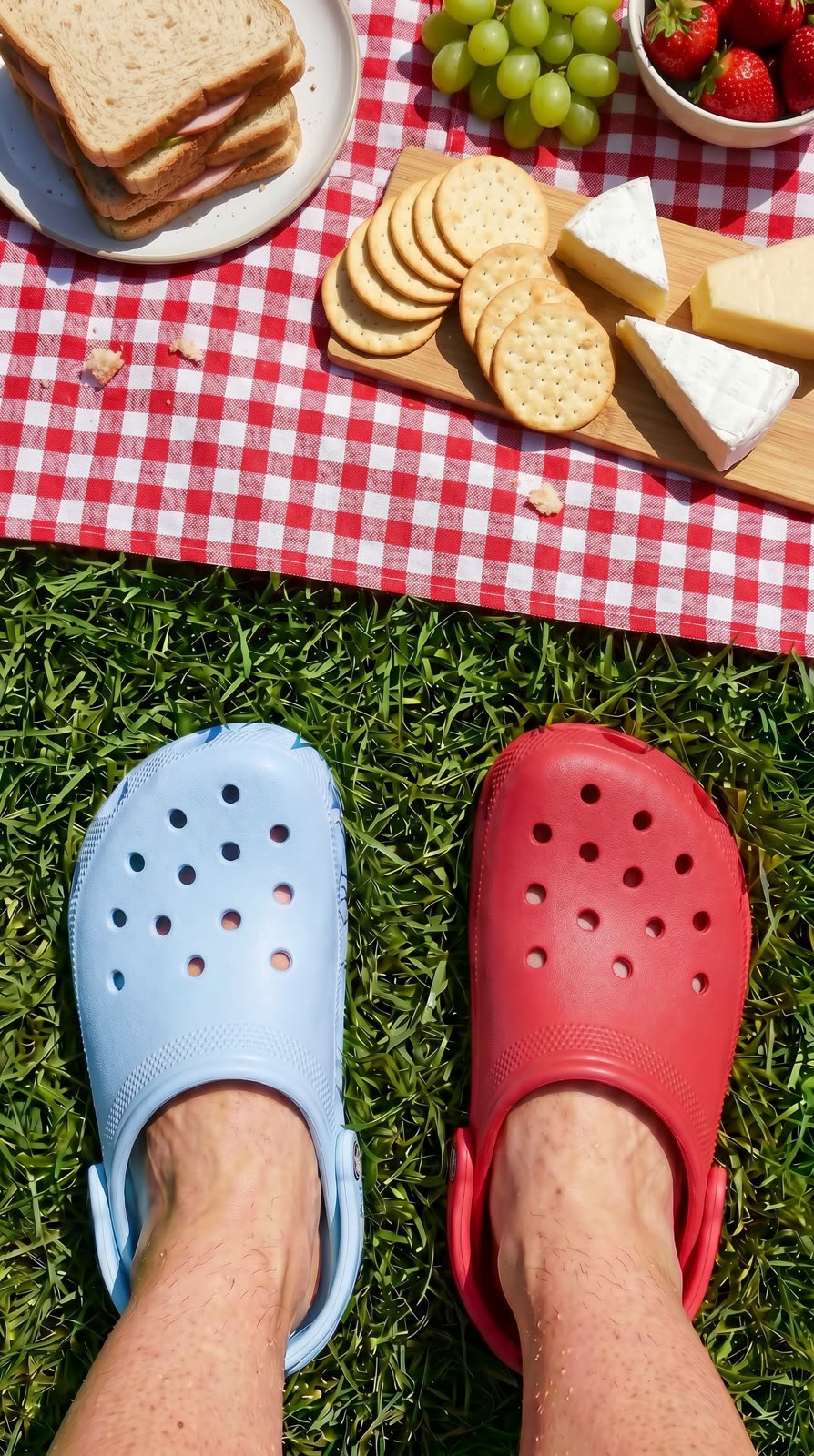
Frame 9 — picnic
The mismatched pair — worn on purpose, styled into the campaign.
:15 Film — Project A

Fashion Swap

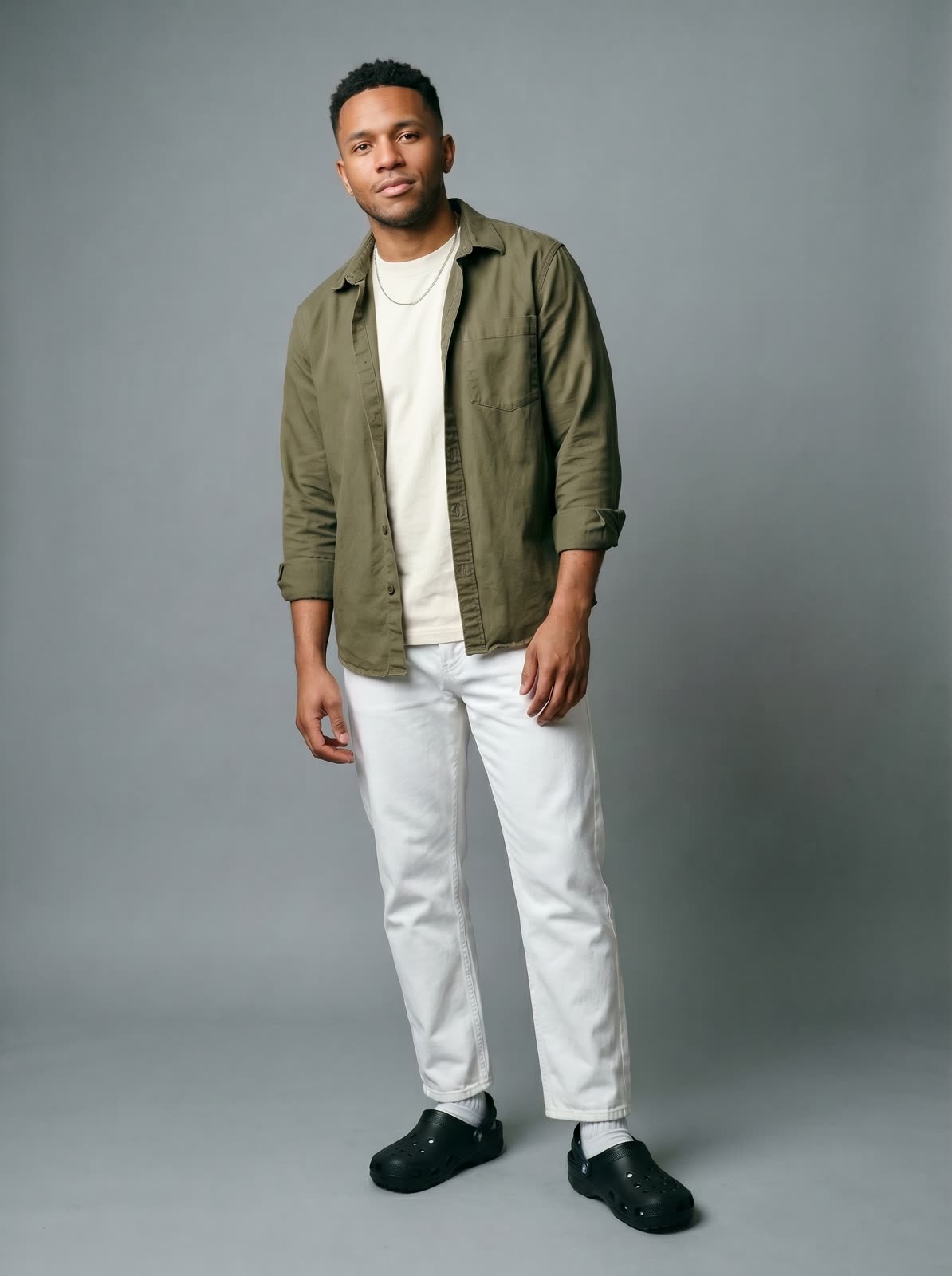
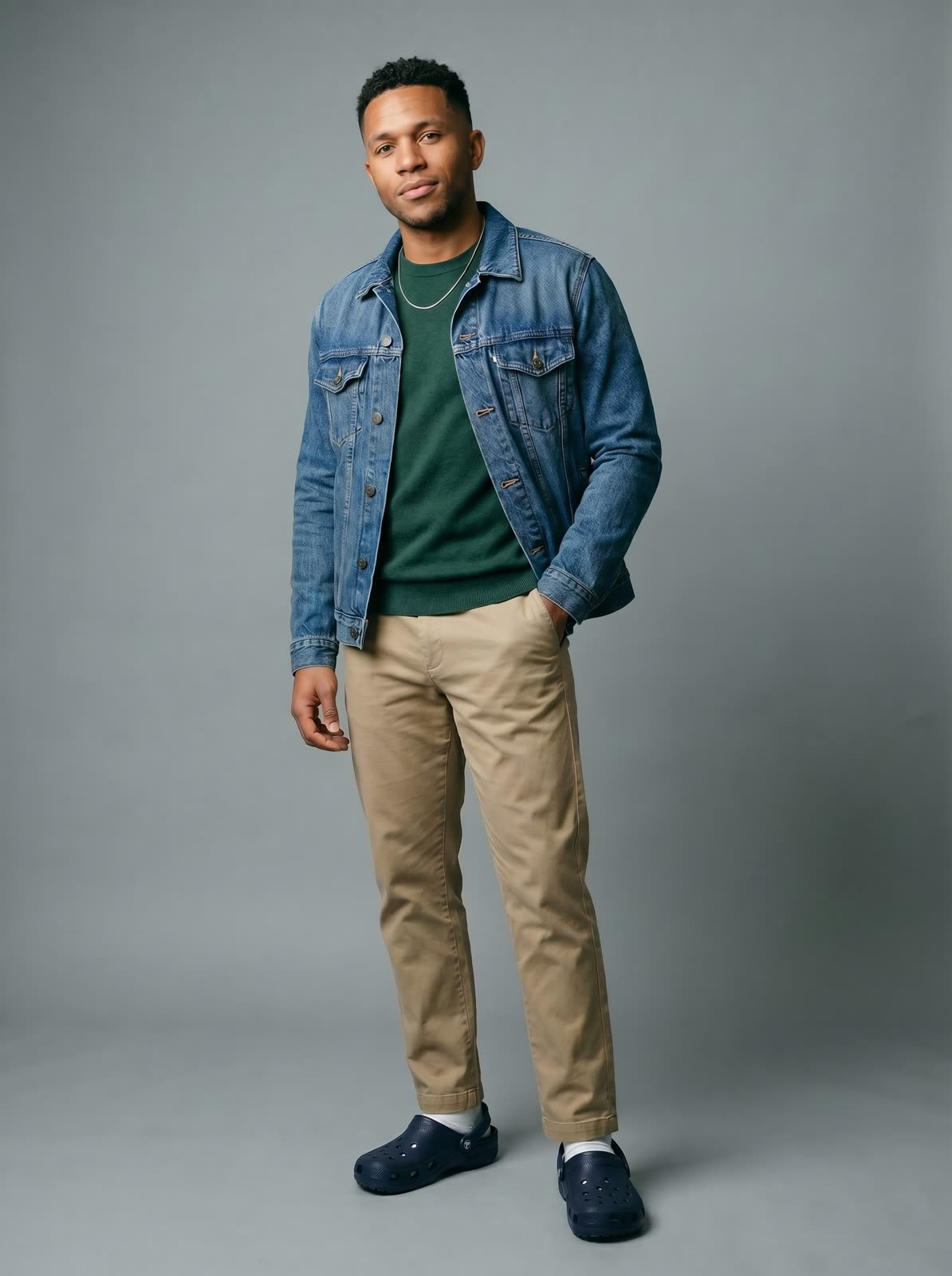
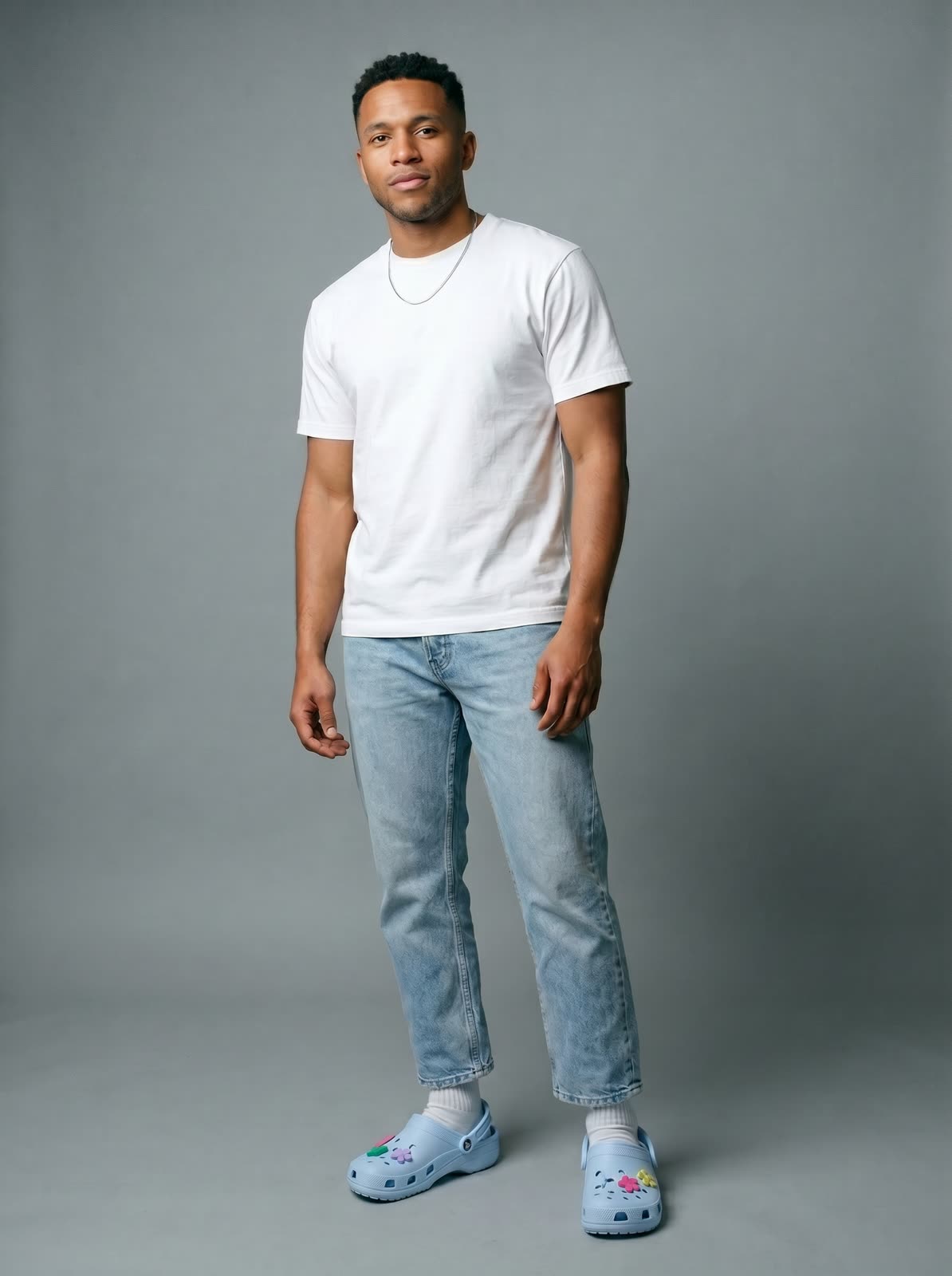
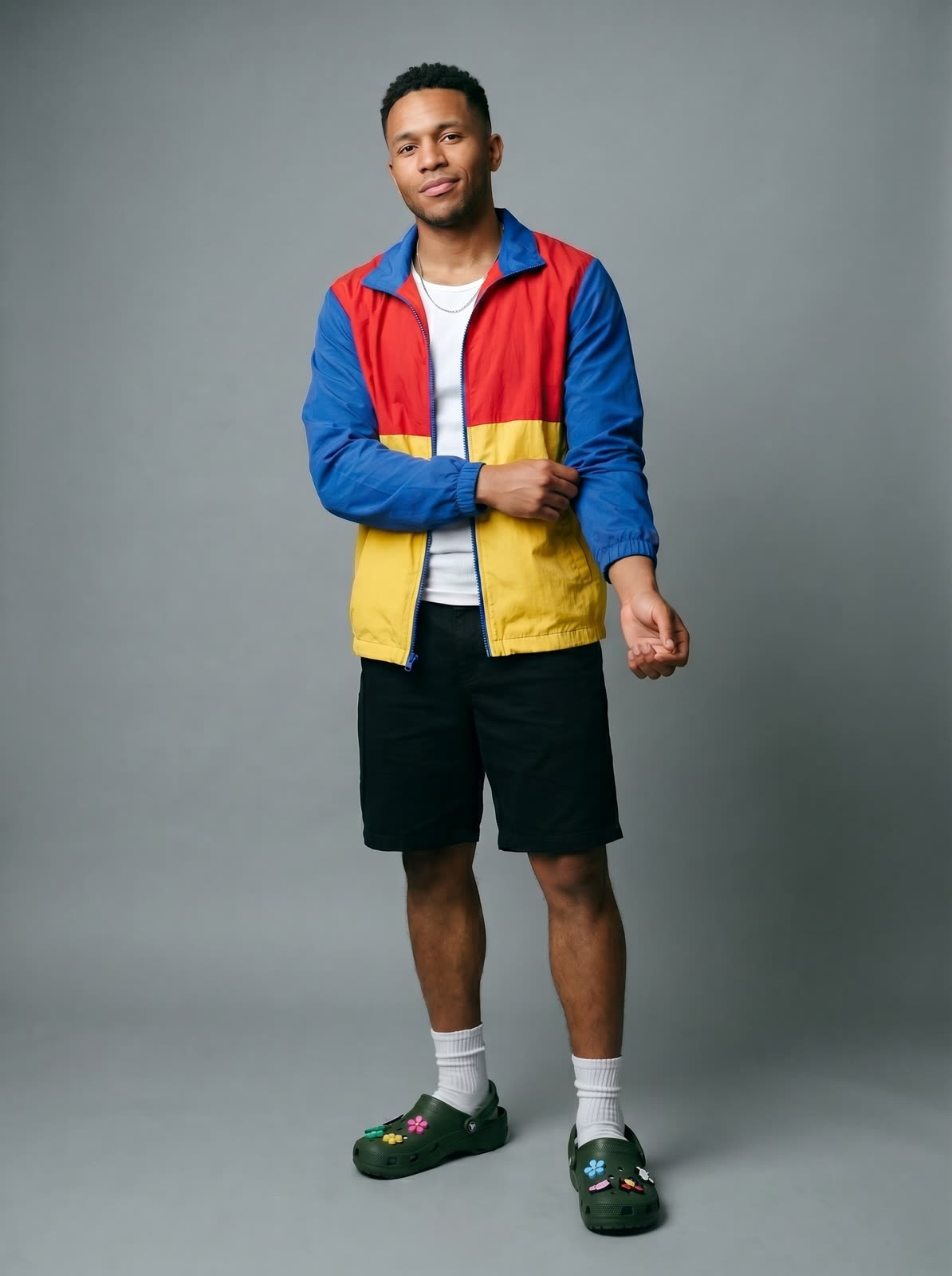
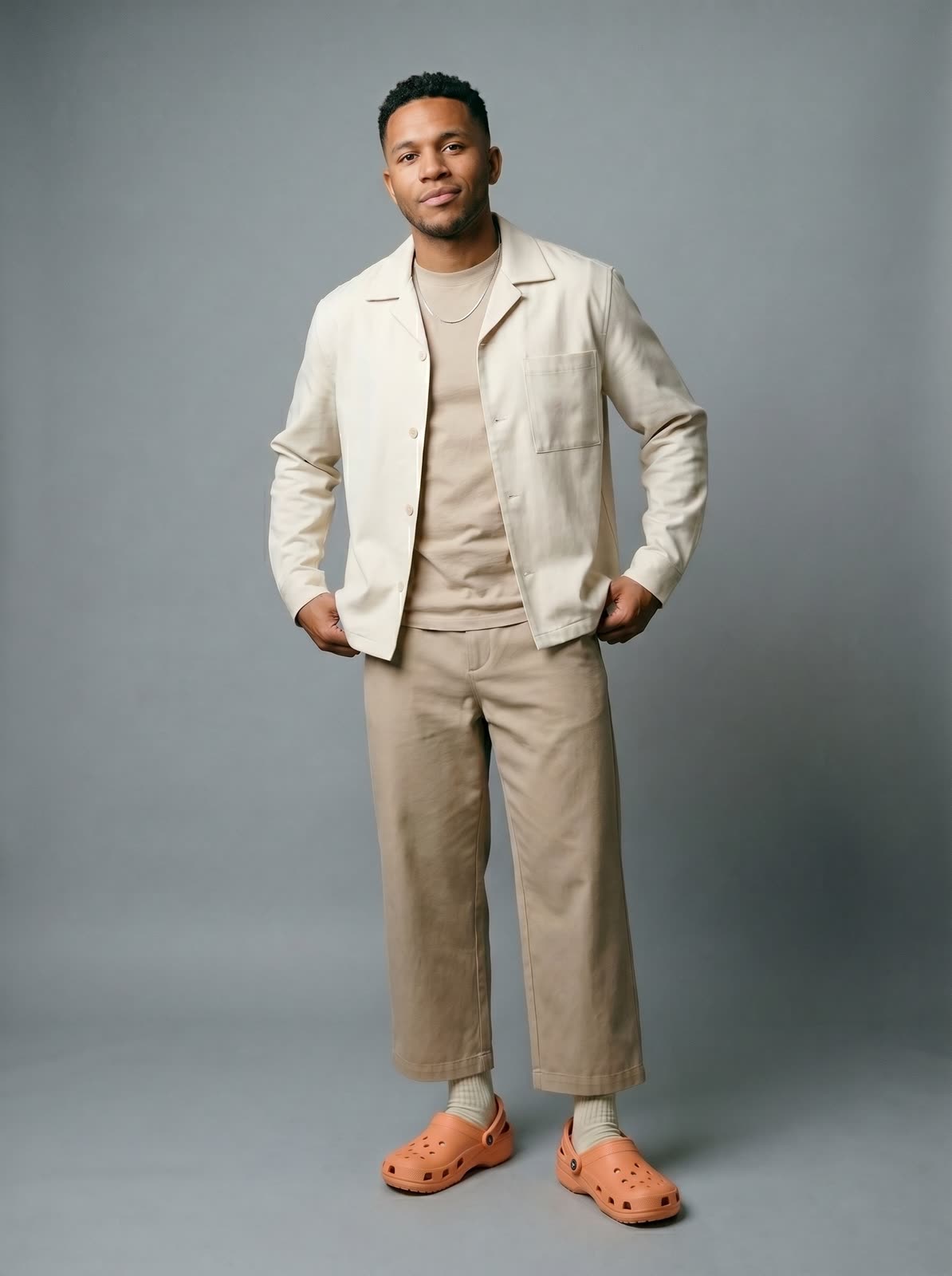
One character, one fixed frame, five looks — the Crocs change with every outfit. Hard cuts land mid-gesture; the styling coordination is the content. Character consistency held across every still and clip from a single locked face reference.

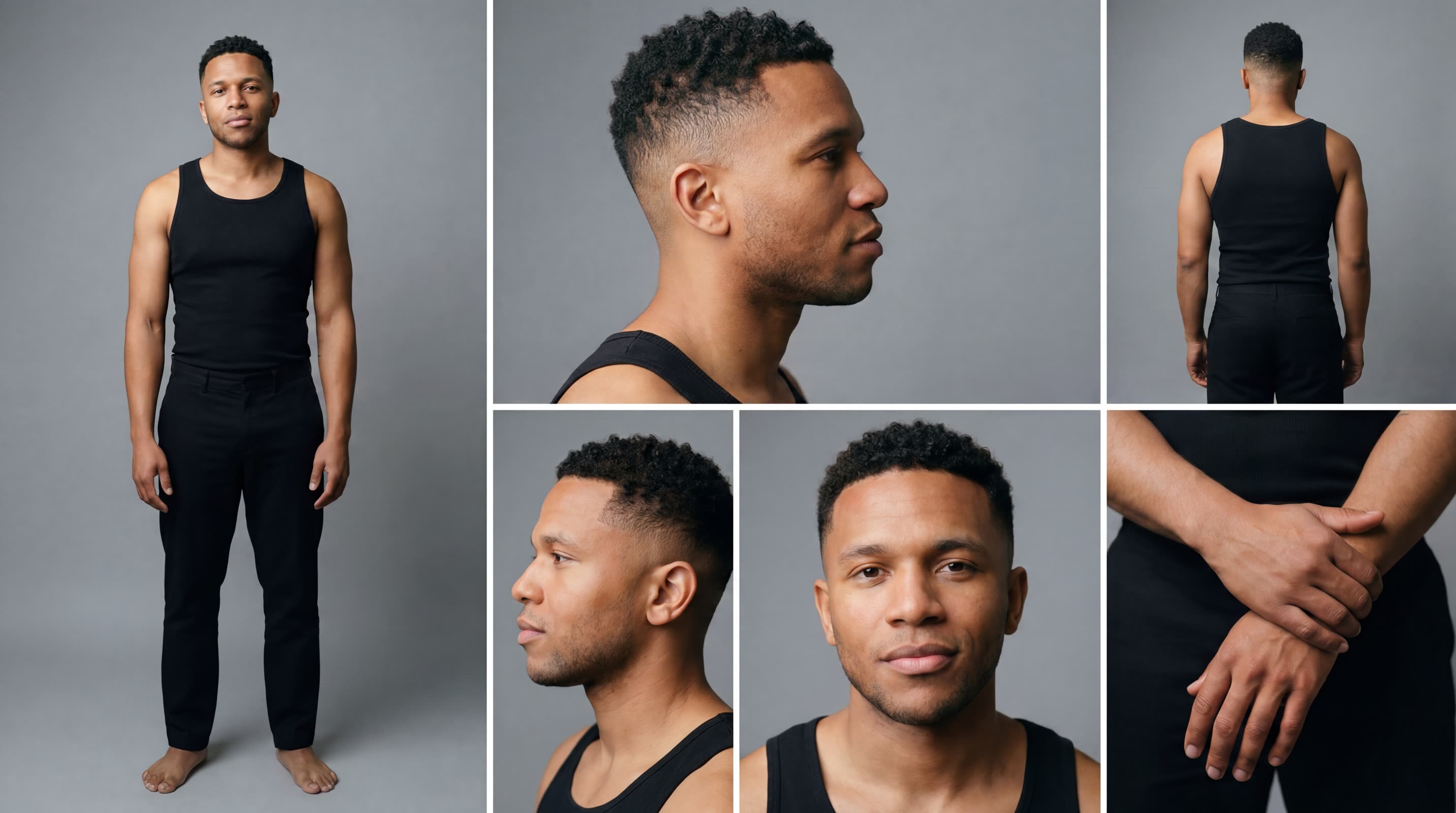
Six-panel character sheet
Six-panel character sheet — identity locked once, carried through 10 stills and 5 clips.
Look 1
Look 1 — olive / black clogs
Look 2
Look 2 — denim / navy
Look 3
Look 3 — white / baby blue, charms
Look 4
Look 4 — color-block / loaded green
Look 5
Look 5 — tonal cream / terracotta
:15 Film — Project B

Six stages, every select human-approved

01

Brief

Brand study from the live platform; tone pillars and a hard avoid-list set before any generation.

02

Refs

Product reference library built from catalog photography — colorways pixel-verified, geometry treated as law.

03

Lock

One hero frame iterated to approval, then locked as the composition reference for every frame after it.

04

Stills

Generated against the locks, zoom-QA’d per select; anything that doesn’t pass as real gets cut.

05

Motion

Micro-motion only — subjects frozen, environments alive. Identity refs ride along on every clip.

06

Edit

Cut grids built in code from each track’s measured BPM; one global grade across every select.

The calls that held it together

Composition Lock
One hero frame became law for all nine. The approved frame-one image was attached to every subsequent generation as a composition reference — camera angle, product scale, and stance had to match it exactly. When a graphic ground kept pulling the pose, the lock won, not the generation.
Character Canon
Identity locked once, then defended. Project B's character came from a single canonical face reference shot on mid-gray seamless — white backdrops bleed into final lighting and push skin toward plastic. Any identity marker that drifted between looks was cut from canon entirely rather than patched per frame.
Re-render vs. Edit
Two different tools for two different fixes. Image editing models anchor hard to their base image — reliable at removing elements and cleaning surfaces, resistant to repositioning anything. Strategy: re-render for layout changes, surgical edit for local fixes. Every select zoom-QA'd at full resolution; feed-size review misses seating and mount errors.
Hard Cuts Only
Generative transitions were tested and rejected. AI flash-swaps and morph transitions both read as AI — one felt wrong on the beat, the other hybridized mid-frame. Every cut in both films is a straight cut in the Remotion edit, with Project B's cuts landing mid-gesture.
Motion Fidelity
The canonical reference rides along on every clip. First motion pass showed face drift and AI skin: image-to-video only sees the plate, so identity drifts. The fix was reference-to-video at 1080p with the character canon attached to every generation — and the lesson that upscalers sharpen what's there, they don't fix it.

Consistency is the product

Anyone can generate a good-looking AI image. The difference between a demo and a campaign is whether frame seven matches frame one — same camera, same colorway, same charms in the same holes. That takes reference discipline, a hard bar — every frame has to pass as real — and an art director willing to throw out good frames that don't match.

This project demonstrates a repeatable brief-to-campaign pipeline: brand study, reference locks, generation under constraint, zoom-level QA, and a code-driven edit — with a full generation log behind every select. The pipeline produced two campaigns for one brand. The process generalizes to any brand.